Treating our olive trees, we trust in the long experience that we have in cultivating these plants and the superior advice of our team of experts. We structure our areas of cultivation into the following categories in order to ensure sustainable cultivation, guaranteeing the high quality standard of our olive oil.

Treating our olive trees, we trust in the long experience that we have in cultivating these plants and the superior advice of our team of experts. We structure our areas of cultivation into the following categories in order to ensure sustainable cultivation, guaranteeing the high quality standard of our olive oil.
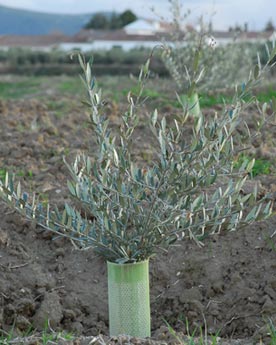
Young Tree > up to 7 years , almost no production
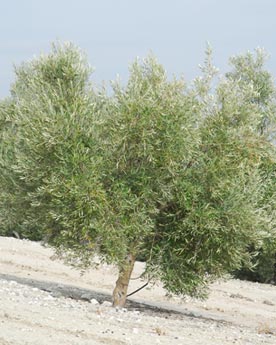
Medium Aged Tree > 7 to 20 years, production of 20 - 40 kg
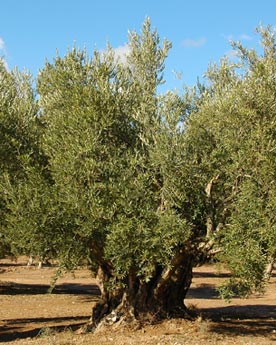
Old Tree > 20 to 150 years, production of 40 - 100 kg
According to our principles of an environmentally sound production and in order to avoid monocultures, we also plant pine trees and broad-leafed trees. Apart from our own team, we also closely work together with an external team of experts to be able to guarantee the best possible protection and care for our trees. All processes up to the microscopic level are under constant control and supervision for the healthy growth of our olive grove to continue.
Care for Tree Population
Since the takeover of our manor Cortijo de Arévalo, we have step by step, kept planting new olive trees. Thus we now are able to manage a very well balanced portfolio of trees with very different ages and harvest capacity, as the quantity of a trees oil production develops according to its life cycle:Young Tree > up to 7 years , almost no production
Medium Aged Tree > 7 to 20 years, production of 20 - 40 kg
Old Tree > 20 to 150 years, production of 40 - 100 kg
According to our principles of an environmentally sound production and in order to avoid monocultures, we also plant pine trees and broad-leafed trees. Apart from our own team, we also closely work together with an external team of experts to be able to guarantee the best possible protection and care for our trees. All processes up to the microscopic level are under constant control and supervision for the healthy growth of our olive grove to continue.
Soil Cultivation
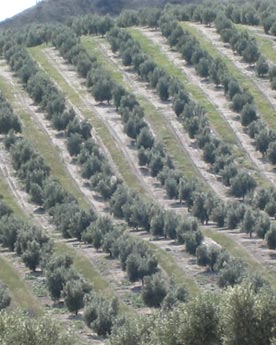
The soil used to grow olive trees in, should consist of either sand, pebbles or rocks. In such soil the trees roots find the best conditions to breathe and grow. We protect and care about our soil through a cover of vegetation, the so called green fertilizer. To this end clover, grass and legumes (nitrogen collectors) are planted in arrays of about two meters in width between the rows of olive trees. This is the most efficient way to protect the soil from erosion as well as to retain rainwater where it hits the ground. Especially through the nitrogen collectors the water is released into the soil very slowly and then drains in the ground. Additionally the ground is aerated by the roots of the plants that make up the green fertilizer, which in turn protects the soil from hardening,Tree-Pruning
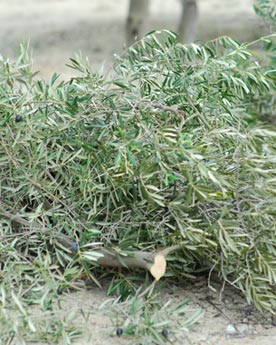
We prune the branches of our trees on an annual basis to achieve the best possible productivity. This can be reached by shaping the tree in a way that most of its energy is used for growth and the production of the olives. It is important to strike a healthy balance between the tree\`s productivity and its natural growth cycle. This means that not only already existing flowering branches are cut free from other limbs for better growth, but shoots for a future harvest are also freed from interfering branches. The trees are cut right after harvest from February until April as trees don't grow in this period of the year, which makes them more resistant against illnesses and parasites.Irrigation
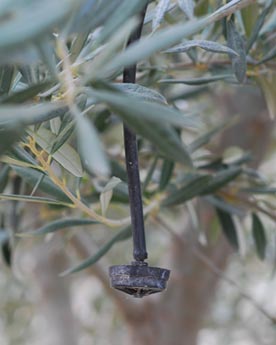
We apply a well-engineered water supply system in order to supply enough water for our olive trees while ensuring that we do not to waste a drop of this most valuable resource. The origin of these irrigation methods dates back to the Arabs who used these systems hundreds of years ago, in order to avoid evaporation. Our manor therefore uses several water reservoirs which are connected through a subterraneous system of pipelines. Using the natural downward slopes, we direct the water directly to the roots of each tree were it gets utilized as drip-water irrigation.Organic Fertilizer
Experts analyze our ground on an annual basis in order to guarantee that our trees can grow in ideal conditions. This enables us to be aware and add any missing natural nutrients which the ground may have lost in phases of strong atmospheric periods such as continuing phases of heat, arid conditions or strong rainfalls. We only apply organic- and mineral fertilizer which we use as careful and sparingly as possible.Harvest
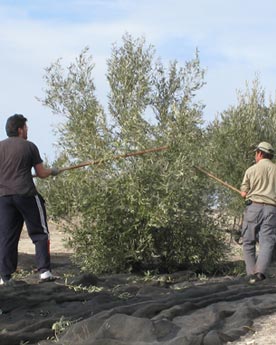
Every year between November and March the olive harvest takes place at the height of the season. At this time of the year, we collect the fruits of our labour from the olive trees and extract their oil. Following an old tradition, we spread finely woven nets under each olive tree and pick the olives by tapping the branches with long sticks and shaking the tree mechanically. The ripe fruits then fall into the nets where they are collected by hand. This labor-intensive process guarantees, unlike other harvesting processes, that our olive oil with its "extra virgin" quality is produced with undamaged and fresh fruits only. Thereby respecting the trees and treating the valuable fruits we use as much consideration as possible.